PPC Tips to Attract Local Audience
PPC Tips to Attract Local Audience
The way businesses find their customers has evolved rapidly in the last few years, and SEO is a big part of the development. Within SEO, strategies are undergoing micro-developments that are being used for even better customer targeting.
An important part of local SEO is PPC. PPC or pay-per-click works on the principle that businesses that put up ads only need to spend revenue when the user clicks. It is a step above the usual broadcast ads, which are not interactive.
The advantage PPC has against other types of ads is that PPC is much more useful for community-specific audiences. To create a successful PPC campaign, you need to factor in "local intent" and how it affects search queries.
Here are 12 pointers on how you can attract local audiences to your business.
12 Insightful PPC Tips to Attract Local Audience
1. Build Campaigns Around "Near Me" Searches
If you've used any browser-based search engines, you would have used a "near me" query. "X near me" is a quick way to find out about services and businesses near where you are. And these types of queries usually originate from a mobile device. The reason why you need to optimize for "near me" searches is that Google considers them a high priority.
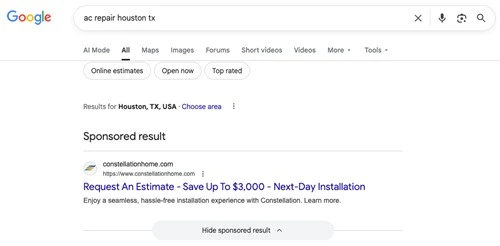
Including "near me" type keywords into your keyword strategy helps. When creating ad copy, use mobile-optimized strategies to get the best results. Having landing pages with the same "near me" intent is a great idea, as it helps funnel users into your website easily.
Ensure that you bid on local intent keywords like "open now", "delivery near me", and more.
2. Leverage Extensive Geo-Targeting Options
If there's one thing about searches that has developed rapidly over the years, it has to be geo-targeting. With more advanced hardware and a much more connected ecosystem, there are now many more comprehensive ways to find out where user search queries are coming from.
Identifying areas where your queries are coming from helps you create better ads targeted to your user base.
When it comes to geo-targeting, there are many ways you can target, but the broad types are targeted by radius and area.
These are used depending on the type of campaign you're creating for your business. Using geo-targeting properly ensures that there is no wastage of ad revenue by people from outside your service area clicking on your ads.
3. Develop Hyper-Local Landing Pages
Landing pages have been a pivotal part of SEO and are that way even today. But having a single landing page and expecting more users to visit your website just does not work anymore.
The key is to customize landing pages to get more visitors from unique search locations. The best way to do this is by creating specific landing pages for the most common search queries.
Include local terms like area names, landmarks, and others in page titles and headings. Embedding the local map widget on the page also helps users find out where your business is.
Highlight content that features local community events to rank naturally on local searches. Adding testimonials from local customers is a great way to build trust and credibility.
4. Use Localized Extensions and Snippets
Ad extensions are pivotal when it comes to funneling local traffic to your website. The first thing you should do is implement local extensions to improve address visibility. Connecting your Google My Business with your Google Ads account ensures that your address is displayed right below your ad.
Before you do this, ensure that your Name, Address, and Phone (NAP) details are accurate.
Structure snippets are a recent addition to Google searches. Rather than generic terms for defining businesses, businesses can pick from a list of related services like "HVAC Installation", "Car Towing", and more.
To add to this, you can also include price extensions for local promotions along with your ad. Before finalizing on the right copy, ensure that you run it through a comprehensive A/B testing phase.
5. Activate Local Service Ads (Google)
Local Service Ads by Google are a way for businesses to get noticed by the local populace. This is significantly different from ads, which are about getting clicks.
LSAs are more about getting the right kind of pre-qualified leads for your business. These work like "digital yellow pages" that are managed by Google. From a visual standpoint, they feature even above PPC ads, so that is a huge benefit.
Since these come with a Google Guaranteed badge, it is prime real estate when it comes to ad spaces. Being guaranteed by Google is a great way to signal how trustworthy your business is.
Another huge benefit for business is that you pay on a per-lead basis and not per click. All of these make investing in LSAs a great option to improve local businesses.
6. Create Localized and Engaging Ad Content
Ad content is often the deciding factor for whether a user clicks on the ad or doesn't. Ad copy has to be appealing and engaging to get the maximum number of clicks. But another aspect to note is that it should be "localized enough" to ensure it has enough reach with the crowd. One way to do this is to incorporate local lingo and landmarks into the ad copy.
Creating tailored messages that take advantage of specific conditions is also a great idea. A good example is mentioning particular climatic conditions like "Beat the heat in X with our quality HVACs!". Users are much more likely to click on tailored content that is relevant to their interests.
7. Bid More for Searches on Mobile Devices
With mobile devices far outperforming other sources of web traffic, companies need to invest more in searches that originate from them. We've already discussed how "near me" searches are almost always from mobile devices. To get more visibility for local searches, you need to bid more aggressively on these types of keywords with local intent.
Another development in searches has been the click-to-call button that appears beside the name of the business in ads. Prioritizing these types of ads will help when it comes to inquiries and walk-ins. Spending more on long-tail and voice search keywords is also a great way to get more people interested.
8. Use Negative Keywords to Filter Searches
When it comes to PPC, every click costs money. The problem here is that you can get clicks from people who may not be interested in your services.
One way to exclude search terms that don't have local intent is to use negative keywords. For example, if you own an automobile mechanic shop, you don't want people clicking on your ad unless they're near you.
Adding "remote" and "car repair guide" as negative keywords prevents your ads from being shown on related queries. Likewise, if you are a business based in Denver and nowhere else, adding the rest of the states as negative keywords prevents wasting ad spend.
9. Optimize Your Google My Business Page (GMB)
One of the most important things you have to do for PPC is to ensure that you have checked and verified your Google My Business Page. Your GMB is like your business's profile page on a social media network. It has all the required details people can use to get in touch with you, including your phone and location.
Ensure that your GMB reflects all your information accurately and make updates if required.
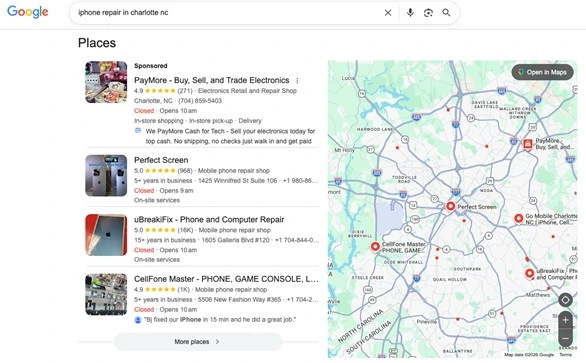
Posting regular updates on your GMB profile is a good way to keep your customers in the loop. Upload high-quality images of your business and products - it does make a difference to potential clients. There is also a GMB FAQ section, which you can use to shed more light on your business.
10. Run Area-Specific Promotions and Events
To get more visitors, businesses should focus on leveraging locally relevant events and other promotions. Running geo-targeted ads is a great way to get the word out about a local sale to potential clients. Share promo codes that are only applicable in specific locations. Advertise grand openings and anniversaries as part of your local promotions.
Getting other related businesses involved is a great way to get more coverage for your local events. Approach micro influencers who have the potential to improve your brand's visibility to gain traction. Tailoring local events that fall on local festivals or holiday seasons really works to increase your leads and walk-ins.
11. Research on “Local Competitor” Keywords
Talking about local businesses, one way to get a better keyword profile is to reverse engineer your competitors' ad campaigns. Identify the 5 biggest competitors that you have, both in terms of industry and local competitors. An easy way to do this is to make a note of businesses that figure on the Google Local 3-pack.
Record their ad copies and extensions through an incognito window to ensure that there are no personalized results. A simple way to do this is to use tools like SEMrush and SpyFu that can deliver detailed results of your competitors' keywords and strategies.
Finally, ensure that you look through their GMB profile and their website for more pointers on how to improve your own.
12. Implement Strong Analytics and Tracking
All of these efforts will go in vain if you don't have a comprehensive analytics and tracking suite for your PPC campaign.
Setting up Google Analytics is an essential first step towards building analytics. Ensure that you have conversion tracking in place for calls and form fills. For more complex tracking setups involving several different devices and methods, Google Tag Manager is a great platform.
It is vital that you analyze location-based conversion data as it can significantly impact and shape your ad strategy. Most people tend to use their mobile devices during the day and switch to computers when they get home. This is a good reason why tracking cross-device behaviour is also essential.
Local Audience & PPC - FAQs
1. Can PPC Also Help Improve Foot Traffic to My Store?
Absolutely. PPC is an ad strategy that is designed to improve digital reach but also appeal to local customers. In-store discounts can be part of the promotion with ad headlines like "Buy One Get One at Our Store!" Location extensions can help people get to your store by directly connecting you to your maps app.
2. What Is the One Thing That Is Critical to Local PPC Success?
The key to the best-performing PPC campaigns is usually hyper relevance. Any local ad copy you put out needs to be relevant to your audience and business.
Users respond positively to ads that are personalized to their unique needs. This can be achieved through localized ad copy, precise keyword targeting, and dedicated landing pages.
3. How Should I Target an Area for My PPC Campaign?
For many years, geo-targeting basically meant "city name" and nothing much else. But today, it pays to have a layered approach to target an area. Radius targeting is a method by which you can specify a "radius" around your store where the ads will be displayed.
Add to this details about your audience, like interests and other details, and you have a much more tailored approach to targeting.
4. How Are Google Ads and Local Service Ads Different From Each Other?
Google Ads and Local Service Ads are significantly different from each other based on several factors. The key difference is the way you pay for ads. PPC charges you on the basis of clicks, while LSA works on a pay-per-lead basis.
The ad placement for LSA is at the top of the search results, even above Ads. Lastly, LSAs have a Google Guaranteed badge, which improves the trust of the business.
5. Is There a Way to Avoid Irrelevant Clicks From Outside My Area?
Yes, you can filter clicks for your PPC campaigns by using a combination of methods. The first is to ensure that you set your targeting accurately so users outside your area are excluded from your ads.
The next step is to update your negative keywords list to filter your ads from irrelevant search queries. By combining these two strategies, you can rest assured that your PPC campaign cuts down on unnecessary spending.
Key Takeaways
● Build hyperlocal landing pages to maximize the chances of getting users from close to your location.
● Optimize bids for mobile devices to get the most out of your PPC campaign.
● Structure campaigns around high-intent phrases like "near me" and "open now" for relevant ad copies.
● Audit your Google My Business profile and verify that all the information on your profile is accurate.
● Refine your targeting process with a multi-layered approach to improve results and decrease ad spend.
● Sync your promotions with local events to ensure more people visit your store.
● Leverage reviews and testimonials from local customers on landing pages to improve trust.