How to Use Automation for Your Ecommerce Website?

How to Use Automation for Your Ecommerce Website?
What is Ecommerce Automation?
Using software tools to complete various online store tasks such as order fulfillment, marketing campaigns, and customer support is Ecommerce automation.
Automating your online business helps you on multiple fronts. The obvious benefit is that you get to save a lot of time. Another significant benefit you get is the effective utilization of the workforce.
You can redirect the workforce into tasks such as data entry to other productive sections of your business. Automation also helps you to keep your product information up to date. This is extremely helpful if you have a wide range of products.
Automation also helps you enhance the customer experience. The most obvious benefit is a chatbot. A chatbot is a program that interacts with your customers and addresses their queries.
Smart Ways to Use Automation for Your Ecommerce Store
1. Using Popups
Windows you use on your online store to advertise, offer discount codes, and capture emails are popups.
Popups float, slide in and interact with customers. You can automate popups depending on your needs. Say that you want to welcome first-time visitors with a 20% off discount coupon.
You can tell, aka command, your popups to appear before the eyes of visitors at a particular time, such as 10 seconds after they landed on your site.
Say that you want to target those who are about to exit the store without buying anything. You can program your popup to monitor the users' mouse movement and scrolling behavior and crop up when they are ready to leave the site.
2. Fulfil Orders Automatically
Optimizing the supply chain is an Ecommerce site owner's dream.
Manually fulfilling orders is a time-consuming task, especially if you have too many orders. Automating the order fulfillment process not only expedites the picking, packing, and shipping of products but effectively eliminates human errors.
Mistakes such as double picking and not recording the orders are not uncommon in the Ecommerce world.
You can sync most automatic order fulfillment apps with your online store. These apps automatically receive your orders' details from your store and process them, besides notifying the customers via email and mobile phone. Some apps even choose the best shipping route for efficient delivery.
3. Using Email Campaigns
Email campaigns are one of the underrated marketing strategies. It is one of those few channels that give an impressive ROI.
An effective email marketing is impossible without the help of automation tools. A bot can outperform a human being every single time when running an email marketing campaign.
An email campaign does not stop with sending a welcome email to a subscriber or a customer. It goes beyond and deep. As an online retailer, it starts with reminding your customers about abandoned carts. Then comes the follow-up if someone purchases your product.
Once your business starts scaling up, some customers will become loyal, and some will go inactive. You have to reward the loyal customers with rewards and make the inactive ones reengage.
For every strategy discussed above, you need to send different emails at different time points. It is humanly impossible to send 5,000 personalized emails to 5,000 people at different timings within a short period.
4. Through Product Recommendations
Automation can help you increase the average order value by recommending the most appropriate products for customers.
It is not uncommon for stores to have a 'You May Like' section beneath their product descriptions. These recommendations are not recommended by staff but by intelligent programs.
These programs take various factors, including but not limited to a customer's browsing behavior, purchase history, and watch history, and recommend products.
In simple terms, these tools personalize each customer's shopping experience. According to a study by Adobe, your customers are likely to spend 40% more time if you personalize their shopping experience.
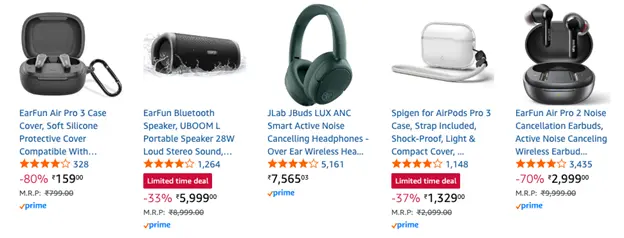
Depending on your store's feasibility, you can place the 'Product Recommendations' tab beneath each product description or on the cart page.
5. Inventory Management
This kind of goes hand in hand with order fulfillment. Many entities that are solely relying on manpower for inventory management suffer from overstocking and understocking.
Using the right automation tool will help you avoid these pitfalls. As an online store, let's say you have 100 units of a product but sold 200 of them.
You realize the mess at the eleventh hour and hastily place an order for another 100 units of the same product from your supplier. Your supplier charges you more for expedited shipping.
Meanwhile, calls start pouring in from customers who are yet to receive their products. Many cancel their orders. Your reputation goes south.
According to this study, 38% of customers say they will stop buying from a seller if the delivery experience is awful.
6. Using Chatbots
One of the commonly used automation tools is a chatbot. A chatbot is a tool that can interact with your customers and address their queries in real-time. The best part is that it is always up and running and can talk to multiple customers at one time.
To put it in a nutshell, it has the potential to replace a live support team.
Chatbots are effective in reducing the burden of your customer support. From a business perspective, reserving your precious manpower to answer FAQs is unwise. According to this Business Insider article, more than 50% of internet users in the US have used chatbots.
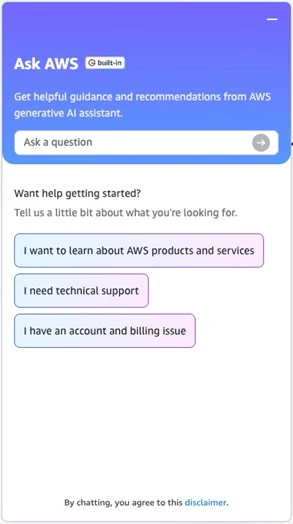
Chatbots can also be used to collect emails. Naming chatbots with quirky names and making them converse with visitors to collect emails is a strategy many online stores follow.
7. Affiliate Management
Keeping your affiliates happy is extremely important if you want to scale up your business.
Having a dedicated portal for them is the first step. An affiliate management tool also helps you in tracking and managing your brand ambassadors.
It may be easy for you to maintain a handful of affiliates. But if the network keeps on growing, switching to an automation tool will be an intelligent decision.
An affiliate automation tool will allow you to identify the best performers by assessing their performance. It also helps you make payments in time, which is crucial in maintaining the business-affiliate relationship.
Most automation tools allow you to assess the campaign performance in real-time. An automation tool is also a sight for sore eyes for your affiliates since they can find link shortening and branding tools within the dashboard.
8. By Segmenting Your Customers
Segmenting customers is beneficial for online stores for targeting. As a business owner, knowing your loyal customers and passive ones gives you an edge in optimizing campaigns.
You do not need a separate tool for segmenting your audience since most email automation tools can do it.
Segmentation helps you spend your resources prudently by identifying customers with great purchase intent. It enables you to personalize the emails.
Personalizing is crucial to boosting your business. You cannot send a generic message to different audiences and expect them to behave the same way.
Sometimes you have to do 'Lead Nurturing' to educate the indecisive customers. And if you draft your email without reasoning why they should make that purchase, they may skip that mail tool.
9. By Scheduling Social Media Posts
We are now in the age of social media. Your presence on leading social platforms is no more an option but mandatory to attract an online audience.
With stories replacing text posts and short-form videos overpowering static images, being active in social media is tiring and bewildering sometimes.
Even if you have an effective content strategy, sticking to a posting schedule is challenging. Because the ideal time for posting differs from platform to platform, you need a scheduling tool to be active on social media.
Some tools are so smart that they can tell you the ideal posting time based on your target audience's engagement. Some even have native features to make your posts go viral.
10. Supplier Onboarding
Supplier Relationship Management (SRM) is equally important to Customer Relationship Management (CRM).
If your e-commerce store is a marketplace for multiple brands, vendor onboarding is a tricky job to do.
From cherry-picking the suppliers to integrating their inventory, there is a lot of work involved in the process.
The crucial part is screening your suppliers using checklists. Then comes the exchange of tax details, marketplace integration, and test runs to ensure whether the order process is smooth.
When the vendors are more in numbers, manning them using your regular workforce is wasted labor.
11. For Managing Reviews
Acquiring authentic reviews is crucial for a business's credibility. If you are a marketplace selling third-party products that have already garnered reviews, this may seem like a no big deal for you.
But if yours is an emerging original brand, you need reviews to scale up your business.
It is human nature to register unhappiness before appreciation. Hence, it is a must to ask your customers to leave a review. You also need to modify your reviews and filter out defamatory reviews.
Yes. There is a difference between bad and defamatory reviews.
Automation will help you sequence your emails for acquiring reviews from your customers. Users need not go through a tedious review process since these emails have built-in review widgets and sliders.
12. By Automating Invoices
An invoice management system is a time and resource saver. It allows you to give your customers round-the-clock access to invoices and receipts.
They need not have to contact you for invoices. As soon as a customer places an order, the system will send an invoice automatically.
There are also plugins and extensions available in the market to create invoices automatically. These plugins automatically track sales and help you monitor the cash flow.
The market also has free software programs to automate your invoicing process.
8 Best Ecommerce Automation Tools
1. QuickBooks Commerce
If you are looking for a comprehensive cloud-based inventory and order management tool, look no further. Quickbooks is a great all-in-one tool to manage your Ecommerce business effectively.
One can purchase backorders, track pack sizes, and batches, manage products, send invoice links to customers and do a lot more with this tool.
The tool is effective in streamlining your inventory and eliminating errors such as double-entries.
You can also get detailed reports, customer insights, and forecasts regarding your business. You can try the tool for free for 14 days.
2. Oberlo
If your e-commerce business is based on the dropshipping model, Obelro may be the right pick for you. Note that Oberlo is exclusively available on the Shopify platform.
The app syncs with your Shopify store and helps you import products, images, and descriptions from other sites.
Oberlo also partially takes up the burden of fulfilling the orders. Once you approve an order, the app will automatically open the vendor's website, add the concerned product to the cart and let you fill in the customer details for shipping.
The automation does not stop there. It can update the customers on order details, update product prices, and a lot more.
The best part is that the app is free to use if your shop has less than 500 products. And you can place an unlimited number of orders with the free plan.
3. Marketo
If you want to take some burden off your marketing team, Marketo can be your pick.
Marketo helps your marketing team personalize the customer experience. The tool does this by analyzing customer data and content.
Marketo has this thing called account-based experiences (ABX). It uses machine learning and predictive analytics to curate the content for each buyer.
They also help you send personalized emails and text messages. The tool also gives you insights into audiences, channels, offers, campaigns, and the like to identify the most successful ones.
The tool also comes in handy for your marketing webinars, product launches, customer service, upsell, etc.
Panasonic, one of the users of Magneto, says the tool radically changed the way it markets products.
4. Mailchimp
Mailchimp is one of the trusted email marketing tools in the market. It has been in the industry since 2001.
Mailchimp claims that even some Fortune 100 companies use their platform to connect with their audiences.
From sending automated marketing messages to building landing pages and creating targeted ad campaigns to facilitating reporting, the tool has all the necessary features to improve customer relationships.
With Mailchimp, going global will not be a problem since it supports 45 languages. Though it started as an email marketing tool, today, it also lets you create great content through its 'Creative Assistant' studio.
You can also integrate an array of apps with your Mailchimp account. Some of the key clients of Mailchimp are Vimeo and TED.
5. Hubspot
This is another CRM tool that is being used by many businesses to up their customer relationship. The platform also has tools for marketing, content management, and sales.
The platform features five hubs -- Marketing, Sales, CMS, Service, and Operations.
The Marketing Hub allows you to increase your traffic, optimize your conversions and run inbound marketing campaigns.
While the Sales Hub empowers you to automate the tasks, the Service Hub handles tickets and customer feedback.
With the help of Operations Hub, you can sync apps and automate certain processes. The CMS Hub gives you SEO recommendations and comes with a drag-and-drop editor for crafting personalized content.
6. Trustpilot
Perhaps one of the unavoidable features of your e-commerce store is the Reviews section. Since reviews influence purchase decisions to a great extent, they need to be monitored and modified.
Trustpilot can be your all-in-one tool to automate your review and feedback collection, improve your organic search ranking and increase the click-through rates (CTR).
Trustpilot accounts for over 7+ billion review impressions every month. The site also generates around 4 million reviews every month.
The company says people have reviewed over 626,000 websites on its platform.
7. Buffer
If you have multiple social media accounts, you need an effective social media scheduling tool like Buffer.
Buffer has a free version but with limited capabilities. Buffer has been in the domain since 2010. Some of the notable brands that rely on Buffer for their social media automation are Burrow, HappySocks, Huckberry, and Food52.
Buffer's job does not end at scheduling your posts. It tells you when your most active audiences are, the number of times you should post for maximum reach, etc. It even suggests you the best type of content, such as image and video, to post.
Buffer is also the official marketing partner of Facebook, Linked In, and Pinterest. The company claims that over 1,60,000 companies use their tool.
8. Zendesk
Zendesk is one of the famous customer support tools used by more than 160,000 businesses worldwide.
It is easy to set up and helps to streamline your customer support processes. You can handle customers' tickets in this tool through email, phone, and social media.
Popular users of Zendesk are Uber, Shopify, and Airbnb. You can sign up for a webinar that tells you how Zendesk can help your business.
Zendesk is customizable as per your business needs. From the dashboard to the chat templates, you can modify everything to suit your taste. According to some users, though it does integrate with apps such as Hubspot, its customer support is not that great.
Ecommerce Automation FAQs
1. Why Should I Automate my Ecommerce Business?
Automating your e-commerce business helps you on various fronts. The apparent benefits are higher productivity and reduced operating costs.
You can also improve your availability if you use the right automation tools. Automation helps you achieve consistency in business while reducing human errors.
It also helps your employees by freeing them up from mundane tasks such as data entry. As a result, they will channel their energy towards things that need human intervention at any cost.
2. Is There Any Downside in Automating my Ecommerce Business?
There is no downside to automating your e-commerce business. But it does cost you some money.
If you are concerned about worker displacement, automation is not your cup of tea. Some worry about the security concerns involved in syncing multiple automation tools with your business.
Your concern is legit. We advise you not to subscribe to any shady automation tools. Look for reviews and reach out to the customer support team of an automation tool to know about them.
An important aspect of automating your business is the robotic nature of the process. A human can respond to situations both critically and creatively. But a machine, aka an automation tool, lacks that flexibility.
3. What if I Ignore Ecommerce Automation?
You will miss the boat. The very idea behind e-commerce is automation.
Take a product page, for example.
A customer does not need an executive to explain the benefits of the product. The persuasion part is semi-automated here through product descriptions and videos.
With automation, you will be able to scale up your business faster and with minimal errors. All while reducing the overall expenditure.
4. Does Automating Support Affect the Customer Relationship?
No. It may make the customer-company relationship a bit plasticky. Well, not literally. But a bot is still going to sound mechanical unless you use a technology like Google Duplex.
Let's get the basics right. By meaning automation, we essentially deploy a machine in place of a human to interact with another human.
A human being, on any given day, can beat a machine when it comes to emotion. People feel connected to a business through some sort of emotion. A machine cannot provide that, but a human can. Hence, use a chatbot for mundane queries like FAQs and use humans for actual conversations.
5. Is Automation Cost-effective?
Yes. Automation will help you cut down your business expenditure. It will cut down labor costs and improve customer experience due to fast shipping. Your business profits depend on how much output you can bring with the limited time and resources. Without automation, things will indeed happen but with hiccups and at a slow pace. Putting your business in automation is akin to being on steroids.